Where Fear Lives, Love Lives Too: Understanding Parental Fear in Trauma-Informed Parenting

Melody Aguayo • December 19, 2025

As a parent, I have spent years being afraid. Too much of my parenting was driven by fear—shaping my decisions, tightening my grip, and setting the emotional thermostat of our home.


I didn’t know how to stop being afraid, because the things other parents only worried might happen?

They were actually happening to our child… and to us.


Every time I thought, “I’m not sure he can stay regulated enough to do this activity,” and then got the call to come pick him up early—it felt like confirmation that fear deserved the steering wheel.


But fear-driven parenting comes with a cost. It can make us controlling. And control is always rooted in fear. If there’s one truth about parenting—especially trauma-informed parenting—that we rarely say out loud, it’s this:


Fear always shows up wherever love lives.


We fear losing what we love. We fear harm coming to what matters most. We fear the things we would give anything to protect.

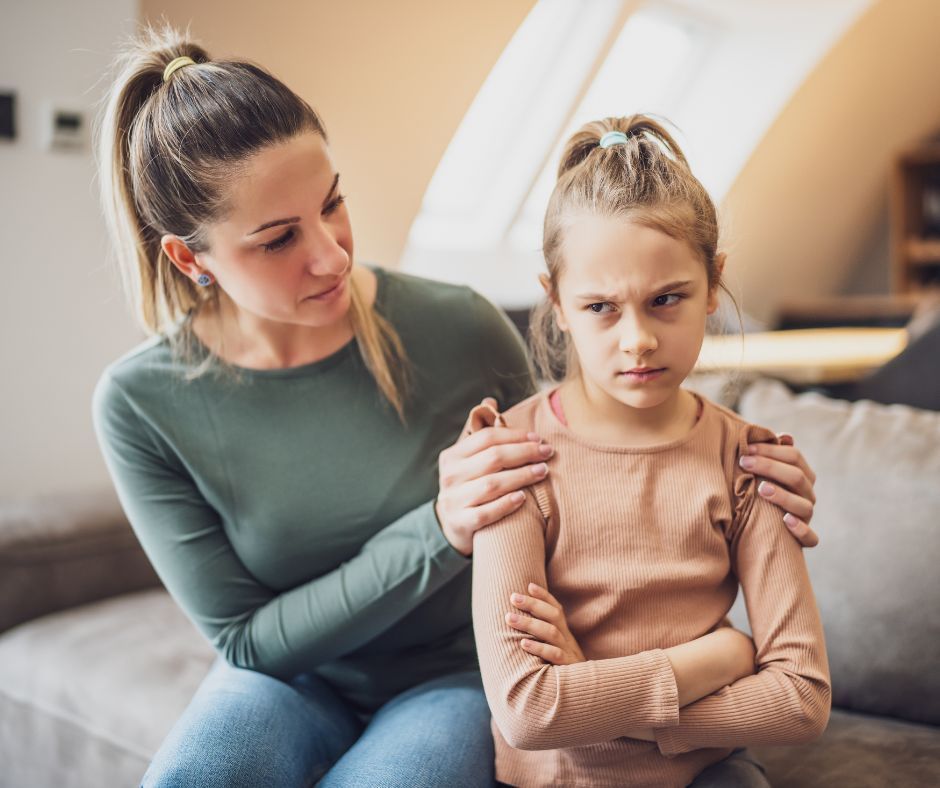
That’s why parenting a trauma-impacted child carries a level of fear many will never understand. Not because we’re anxious or dramatic— but because the stakes feel higher, the risks feel sharper, and the love runs unbelievably deep. This fear isn’t a flaw. It’s evidence of attachment.


Fear Is a Byproduct of Love


Every parent worries.

But raising a child whose early experiences reshaped their brain, and nervous system brings fears most parents never touch.

A parent of a neurotypical child might worry, “Will they make friends?”

A trauma-informed parent wonders, “Will they ever feel safe with another human being?”

A neurotypical parent might worry about grades.

A trauma-informed parent worries whether their child can stay regulated long enough to survive a school day without collapsing.


Fear Gets Loudest Where We Feel the Least Control


This is the part that breaks parents open:

You can’t control the outcomes.

You can give your child structure, connection, safety, sensory tools, regulation strategies—

and still watch them struggle.

You can do everything “right,”

and still see dysregulation, impulsivity, shutdowns, shame responses, lying, stealing, hiding.


Fear grows wherever we love something deeply but can’t guarantee its safety or its future.


So, our minds spiral:

“What if nothing helps?”

“What if they never recover?”

“What if they push everyone away?”

Or:

“What if I can’t do this forever?”

“What if I’m not enough?”

“What if my mistakes become their scars?”

Trauma-informed parenting exposes the limits of our control every single day—

and that’s terrifying not because we’re weak, but because we love fiercely.


Fear Does Not Mean You’re Doing It Wrong


Parents often whisper to me:

“Why am I so scared all the time?”

“Why can’t I relax like other parents?”


Here is the truth:

Your fear is not a sign of failure.

It’s a sign of deep investment.

It means you’re tethered to your child.

It means their wellbeing matters to you on a cellular level.

It means you’re paying attention.

Your child has lived through things no child should ever know.

Loving them means stepping into a story that carries risk, unpredictability, and heartache—

but also, resilience, beauty, and the chance to change the trajectory of their life.

Fear doesn’t disqualify you.


It connects you to the very things and people you are the most afraid of losing. 

Many trauma parents worry that fear will make them reactive, angry, or controlling.

And sometimes it does, because fear makes the nervous system brace. But the good news is, we can learn to talk ourselves off that ledge and move back into a “responsive mode” not a “reactive mode”.   Remind yourself why you are afraid;


Fear Can Point Us Back to What Matters Most


Instead of letting fear drive the vehicle of your emotions, just listen to the messages it is sending to you.  Communicate those messages to your children.  

Ask:

“I’m afraid to lose you because I love you so much.”

“ I’m afraid that I won’t be able to protect you anymore if you make that decision.” 

“I’m afraid your being loyal to someone who isn’t looking out for your best interest.” 

“I’m afraid because I understand how big the consequences could be.”


Fear itself isn’t the problem. 


Letting fear control you and isolate you is a problem.  Your fear deserves a witness, not a critic.

navigating a labyrinth without a map
By Melody Aguayo December 12, 2025
Parenting or teaching trauma-impacted children can feel like navigating a labyrinth without a map. The behaviors we see are often confusing, frustrating, or overwhelming—and it’s tempting to assume that these kids are acting out on purpose.
Children who come from early adversity or chronic stress
By Melody Aguayo December 5, 2025
Children who come from early adversity or chronic stress grow up in environments where their nervous systems are constantly trying to survive. Because of this, they receive a steady stream of confusing, conflicting messages—messages that shape how they see themselves long before they can put words to the pain.
A hug from a tired mom
By Melody Aguayo November 27, 2025
“I know it sounds ridiculous,” she said softly, “but I worry about everything.” A mom with tired eyes sat across from me, explaining why she refused to leave her child with anyone—even for a moment of respite.
By Melody Aguayo November 21, 2025
“I know it sounds ridiculous,” she said softly, “but I worry about everything.” A mom with tired eyes sat across from me, explaining why she refused to leave her child with anyone—even for a moment of respite.
Parenting and Adoption Trauma
By Melody Aguayo November 14, 2025
Even God Wanted a Peaceful Home My husband loves peace. When we first got married, I wondered what on earth was wrong with him. It was like he just refused to argue with me. I think it was partly my age (19) and partly my personality, but I actually enjoyed a bit of conflict here and there. If someone offend
Understanding and Supporting School Refusal
By Melody Aguayo October 24, 2025
There’s a certain kind of panic that rises in a parent’s chest when their child begins refusing school. It starts with small things—complaints about stomachaches, missed assignments, growing resistance to waking up—and before you know it, the morning routine has become a daily battle.
You will have seasons of coasting through the sky.
By Melody Aguayo September 26, 2025
Dear Little Mama, Stop looking for the final landing strip of this parenting journey—it doesn’t exist. I know you think it does. You see airplanes landing all around you… safely, smoothly, touching down on milestones and achievements you can only imagine.
how to handle verbal rejection
By Melody Aguayo September 19, 2025
That’s such an important (and painful) question. When a trauma-impacted child rejects a parent—whether through words, behaviors, or distance—it can cut deeply.
A teenager in the grips of psychosis
By Melody Aguayo September 12, 2025
One of the most painful contradictions in our mental health and justice systems lies in the way we treat teenagers struggling with severe mental illness, including psychosis. On one hand, these young people are granted civil rights that allow them to refuse psychiatric medication—even when their judgment is deeply impa
attachment as a series of developmental “lessons” children
By Melody Aguayo September 4, 2025
Dr. Gordon Neufeld describes attachment as a series of developmental “lessons” children naturally move through when caregiving is consistent and secure: