Consequence Over Rule: What My Toll Ticket Taught Me About Teen Brains

Melody Aguayo • April 30, 2026

Today I got a ticket. I earned it. I sailed past a toll pay station, waved politely at the camera, and kept driving. I did the math in my head. Pay now and fumble with directions, or pay later and keep my brain online. I was in a new city, juggling a to-do list for my son that felt like a small novel. I am not a gifted navigator. Once I get off course, I can stay off course for a while. Ten extra dollars felt like a cheap price for staying regulated and getting where I needed to go.


I chose the consequence over the rule. I am not ashamed of it. In fact, I stand by it. I am pretty good at assessing risk and deciding when to bend a rule because the real cost of compliance is too high in that moment. You do this too. We all do. We speed a little. We text back later than we should. We park in the wrong place when our kid is needing a bathroom with urgency.  We bring our kid to an adults-only event because the baby-sitter cancelled last minute.  


Here is the part that keeps tugging at me. When adults make a calculated choice like mine, we usually extend grace to ourselves. We say things like, It was worth it. I knew the consequence, and I accepted it. When teens and young adults, especially those with trauma-impacted brains, break a rule or make a risky choice, we tend to tighten up. We jump straight to, What were you thinking? or You knew better. The truth is, many of our kids are not good at risk assessment yet. Not because they are careless. Because their brains are still under construction and trauma changed the building plan.


Let’s break that down in human language. The part of the brain that helps weigh future outcomes and hit the brakes on impulses matures later than the part that seeks novelty and relief. For kids with trauma histories, stress chemicals can hijack the whole system faster. That means the relief center gets louder, and the brakes get spongy. If you have ever tried to stop a car with soft brakes, you understand the gap between what someone knows and what they can do in real time.


My toll choice had a logic. If you had asked me, Why did you skip the toll? I would have said, It kept me regulated. I did not want to get lost. I had a lot riding on arriving on time for my son. Paying a fee later felt manageable. Those reasons make sense to me, and probably to you too. What if we approached our kids with the same curiosity? Not, Why did you do this terrible thing, but genuinely, Walk me through your decision in your own words.


When a teen smokes weed even though jail is a possible outcome, from the outside it looks ridiculous. Inside their body, the math can be very different. The risk of getting caught might feel smaller than the risk of drowning in anxiety for the next eight hours. Or the numbness of being high might temporarily mute the drumbeat of I have nothing that motivates them. These are not excuses. They are explanations. Explanations point to the skill gap we can actually help with.

Curiosity does not mean permissive. It means accurate. It means we want the full map before we redraw the route.


Here is a script you can try the next time your teen makes a choice that sends your stomach to the floor:


  • Start regulated. Take three slow breaths. Shoulders down. Jaw unclenched.
  • Lead with relationship. I love you. I am glad you are safe.
  • Ask for the map. Help me understand the choice. What was happening in your body and your brain before, during, and after?
  • Name the need. Were you trying to feel calmer, belong, avoid something, or get a rush?
  • Validate the logic, not the behavior. I can see why that felt like the fastest way to get relief. That makes sense. We still need a safer plan.
  • Build a replacement plan together. Two or three options that meet the same need with less risk. Practice them in calm times.
  • Clarify predictable boundaries. Consequences should be known in advance, connected to the behavior, and delivered calmly. No lectures. No shame.


Notice what happens in that flow. You are treating your young person like a problem-solver whose tools are not fully developed yet. You are moving from Why are you like this to What skill or support was missing. That is the heart of trauma-informed parenting. Kids do as well as they can with the skills they have. When the skill is thin, the behavior gets loud.


Also, a reminder to my fellow mothers in the trenches. Your brain needs support too. Many of us are running on fumes. We make fast math decisions all day long. Pay the toll later. Order takeout instead of arguing about vegetables. Bend bedtime because connection beats compliance tonight. That is not failure. That is flexible, values-based parenting in a real life. Extend to yourself the same curiosity you are practicing with your child.


If a ticket shows up in your mailbox this week, let it be a sticky note for compassion. Ask yourself, What was I trying to protect, preserve, or avoid in that moment? Then ask your teen the same kind of question the next time things go sideways. You might hear, I smoked because the anxiety ate me alive. Or, I did it because feeling nothing felt safer than feeling everything. That information is gold. It tells you where to build scaffolding.


The path forward is not perfect compliance. It is wiser choices over time. Teach your child how to notice their internal alarms. Teach them how to buy themselves five minutes before they act. Offer concrete swaps. If weed is the quick relief, what else brings the nervous system down fast? Cold water on the face. A weighted blanket in the car. A short, hard burst of movement. Texting a safe adult one word that means Call me now.


I will pay my toll ticket. I will also keep choosing regulation over rigid rules when the trade-off is clear. Our kids are running that same equation, but with fewer tools and more static in their heads. Let’s bring the curiosity, teach the skills, and keep the relationship front and center. That is how we get everyone home without missing the real turn we care about most: connection.


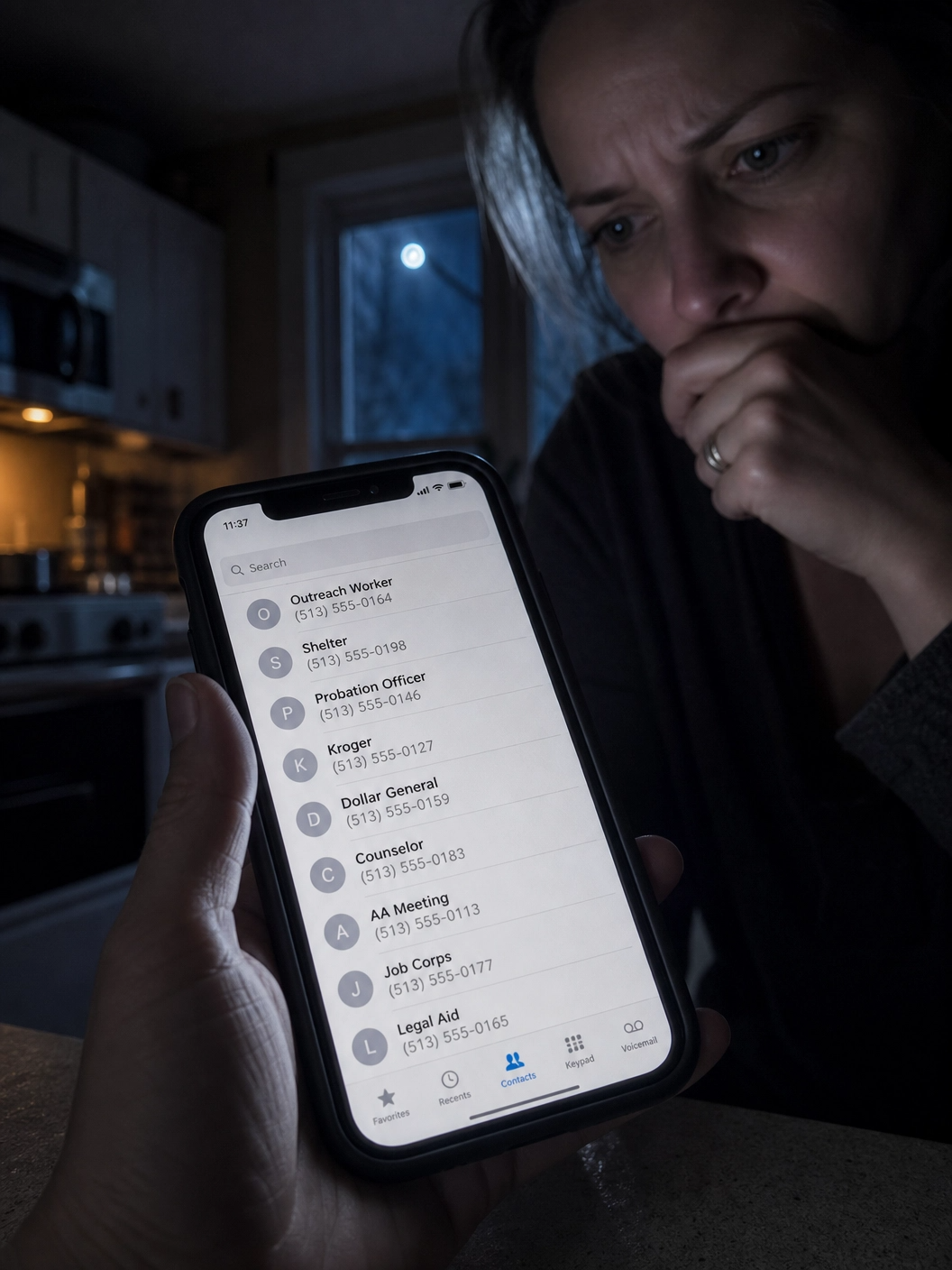
a cluttered smartphone screen showing many contact names and numbers labeled like outreach workers..
By Melody Aguayo May 19, 2026
I used to have a phone full of my son. Not pictures, though I had those too. I mean contact entries. Numbers stacked like Jenga blocks. Street outreach workers and shelter phone numbers. A friend who spotted him on the corner by the Kroger. The officers who understood that turning him in was not betrayal.
child glued to a screen
By Melody Aguayo April 24, 2026
If you have ever looked at your child glued to a screen and thought, “This thing has tractor beams,” you are not wrong. For many kids, especially those shaped by early adversity, digital tech offers quick relief. Fast rewards. Instant connection. Which can feel like a warm blanket on a cold day.
Parenting From a Distance
By Melody Aguayo April 13, 2026
There are sentences I wish no parent ever had to say out loud. Out-of-home placement is one of them. If you are here, you are already standing in a hard hallway. Please hear me.
As a parent, I have spent years being afraid
By Melody Aguayo December 19, 2025
As a parent, I have spent years being afraid. Too much of my parenting was driven by fear—shaping my decisions, tightening my grip, and setting the emotional thermostat of our home. I didn’t know how to stop being afraid, because the things other parents only worried might happen? They were actually happening to our c
navigating a labyrinth without a map
By Melody Aguayo December 12, 2025
Parenting or teaching trauma-impacted children can feel like navigating a labyrinth without a map. The behaviors we see are often confusing, frustrating, or overwhelming—and it’s tempting to assume that these kids are acting out on purpose.
Children who come from early adversity or chronic stress
By Melody Aguayo December 5, 2025
Children who come from early adversity or chronic stress grow up in environments where their nervous systems are constantly trying to survive. Because of this, they receive a steady stream of confusing, conflicting messages—messages that shape how they see themselves long before they can put words to the pain.
A hug from a tired mom
By Melody Aguayo November 27, 2025
“I know it sounds ridiculous,” she said softly, “but I worry about everything.” A mom with tired eyes sat across from me, explaining why she refused to leave her child with anyone—even for a moment of respite.
By Melody Aguayo November 21, 2025
“I know it sounds ridiculous,” she said softly, “but I worry about everything.” A mom with tired eyes sat across from me, explaining why she refused to leave her child with anyone—even for a moment of respite.
Parenting and Adoption Trauma
By Melody Aguayo November 14, 2025
Even God Wanted a Peaceful Home My husband loves peace. When we first got married, I wondered what on earth was wrong with him. It was like he just refused to argue with me. I think it was partly my age (19) and partly my personality, but I actually enjoyed a bit of conflict here and there. If someone offend
Understanding and Supporting School Refusal
By Melody Aguayo October 24, 2025
There’s a certain kind of panic that rises in a parent’s chest when their child begins refusing school. It starts with small things—complaints about stomachaches, missed assignments, growing resistance to waking up—and before you know it, the morning routine has become a daily battle.